Diwali fell on November 8 this year, and the offers are still landing in WhatsApp groups: free parking, a modular kitchen, a "no GST" line, a 5% festive cut. Some of it is real value. A lot of it is a price you could have negotiated in March. Before you sign anything, it helps to know what the market is doing underneath the banners.
What the numbers say about NCR right now
The headline is odd. Fewer homes are selling, yet prices keep climbing. Knight Frank data reported this autumn shows NCR sales down 11% over January to September 2026, with Gurugram taking the sharpest fall. ANAROCK's Q3 read put NCR average prices up 12% year on year, the highest among the seven big cities it tracks.
Put those together and you get a market where developers are holding rates and sweetening the package instead. Cutting the base price signals weakness, and nobody wants to be the first tower in a sector to do it. A freebie costs less and doesn't reset the sector's benchmark.
If you want the background on why two reports disagree about the size of the rise, we unpacked it in NCR Q3 prices up 10.6% or 12%.
Inventory is why offers exist
Gurugram carries roughly 59,727 unsold units, which one festive-season analysis translates to about 9.6 quarters of supply. Treat that as a reported figure, since inventory counts vary by who is counting and what they include. Still, nearly two and a half years of stock is not a seller's market in every pocket.
That stock is not spread evenly. Newly launched towers on the premium corridors sell on launch pricing. Older, slower projects are the ones stacking up freebies. We covered how that overhang behaves in NCR home sales outpace launches, yet unsold stock barely moves.
Four ways to convert an offer into rupees
Ask for the offer in writing, then price it. Here is the routine I would follow.
- Strip the freebie. A ₹4 lakh modular kitchen you would have fitted anyway is worth maybe ₹2.5 lakh to you. A car park you don't need is worth zero.
- Compare the all-in rate. Divide the total payable (base price, PLC, EDC/IDC, club, parking, GST) by saleable area. Two projects with the same base rate can differ by ₹800 a sq ft once extras are added.
- Check the payment plan. A subvention or "pay 10% now" scheme means the developer is financing you. Someone is paying for that, and it is usually baked into the rate.
- Benchmark the sector. Our Gurugram sector-wise rate guide gives you a ballpark so a "discounted" ₹17,000 doesn't turn out to be the normal ₹17,000.
Under construction or ready: the discount means different things
On an under-construction flat, a discount is a bet on delivery. You are paying today for a promise dated 2029 or so, and a lower price does nothing about delay risk. On a ready flat, the logic flips. You can see the building, meet residents, and check the maintenance bills.
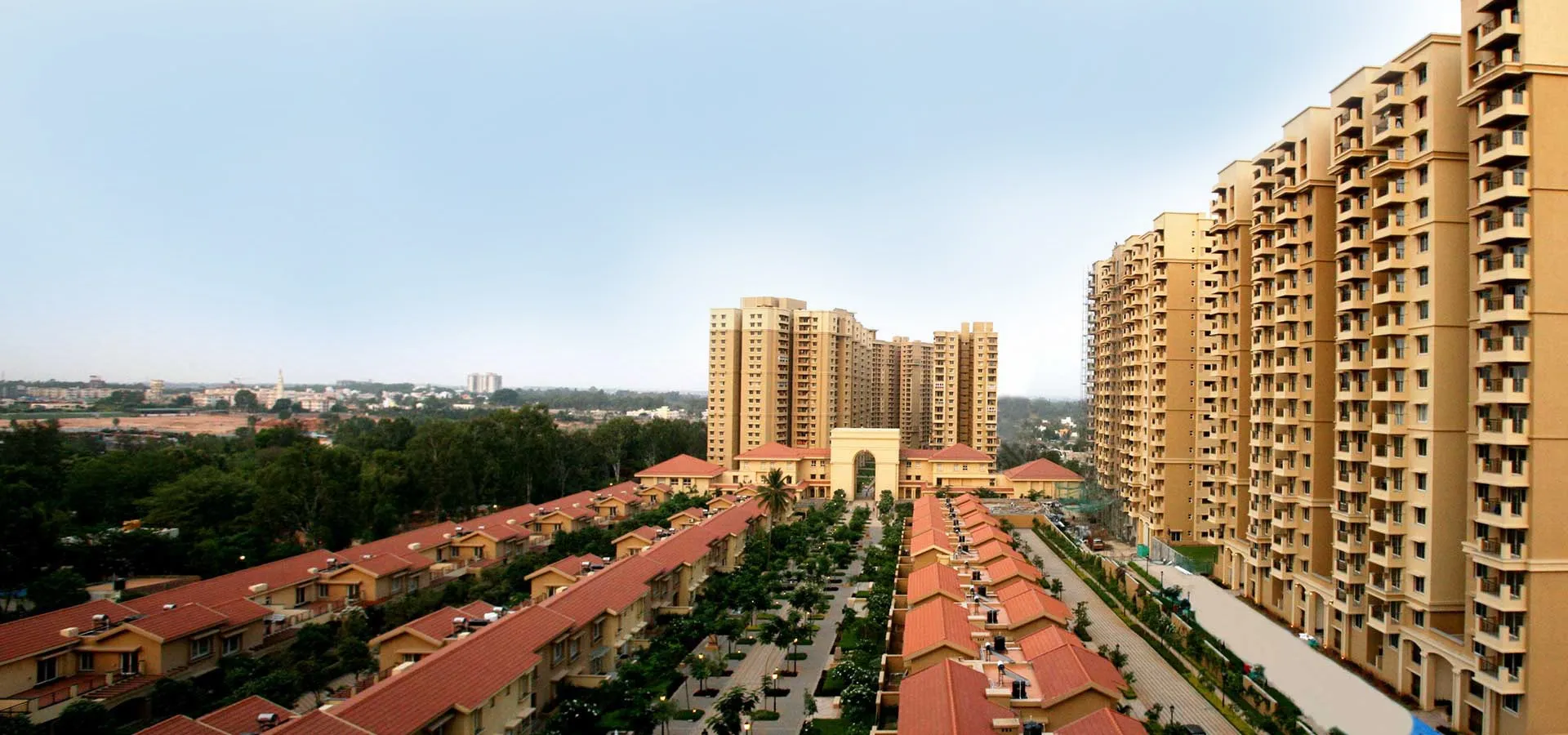
That is one reason ready inventory tends to attract the sharper negotiators. Our list of best ready-to-move projects in Gurugram is a decent starting shortlist. And if you are comparing a large township like Sobha City in Sector 108 against a smaller boutique launch, compare the all-in rate, not the banner.
Do the unglamorous checks first
An offer expires on a date. Due diligence shouldn't. Pull the project's registration on the Haryana RERA portal and read the declared completion date, the quarterly progress filings and any complaints. Check the escrow account arrangement. Ask your bank what its loan sanction says about the project, because lenders do their own legal vetting.
Then look at your EMI, not the festive price. The RBI repo rate sets the direction for floating loans, and a 0.25% shift on a ₹1.5 crore loan over 20 years changes the monthly outgo by a few thousand rupees. Small, but it is permanent, unlike the free parking.
One line from SS Group's Ashok Singh Jaunapuria, quoted in The Realty Today, stuck with me: a home purchase is "too significant a decision to be driven by discounts alone."
A worked example with round numbers
Say two 3 BHKs of 1,700 sq ft saleable area sit in the same sector. Project A quotes ₹15,500 a sq ft with a "festive package" of free parking and a ₹3 lakh interior credit. Project B quotes ₹15,900 with nothing on top. Project A looks cheaper by ₹400 a sq ft, or ₹6.8 lakh.
Now add the extras. If A charges ₹5 lakh more in PLC and club fees, and B has them folded in, A's advantage shrinks to under ₹2 lakh. Take away the interior credit you won't use and the gap is basically a rounding error. The cheaper-looking flat may not be cheaper at all. (This is an illustration, not a quote from any real project.)
The reverse also happens. Sometimes the plain-looking offer is the better one because the developer has already absorbed GST on a ready unit or waived the transfer fees. You only find out by building the sheet yourself, line by line, which takes about twenty minutes and a calculator.
When a discount is a warning
A very deep cut deserves suspicion. Ask why. Has construction slowed? Is the developer short of cash and pulling in bookings to fund the next slab? Check the last two RERA quarterly updates for progress against the declared plan. A project that is on schedule can afford to be firm on price. One that isn't often cannot.
Also watch for urgency. "Only three units left at this rate" is the oldest line in the book, and with thousands of units unsold across the region it is rarely true. Ask for the unit allocation chart and see for yourself.
The takeaway
Festive offers are packaging, and packaging is fine when you price it. Convert every freebie to rupees, compare all-in rates per sq ft, verify RERA, and walk away if the deal needs a decision by Friday. With NCR prices up 12% and sales down 11%, the developer needs your signature at least as much as you need theirs. Use that.