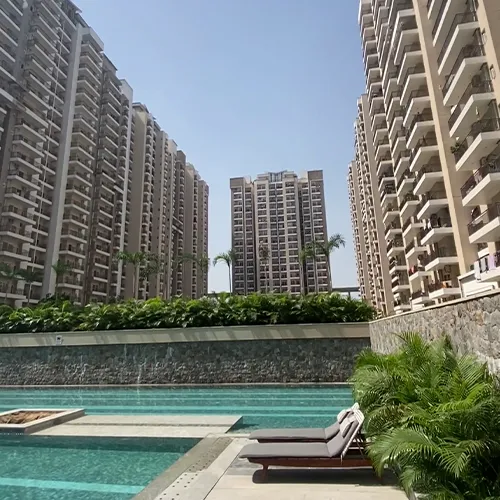
In May 2026, residential units in Sector 103 along the Dwarka Expressway corridor are quoting ₹9,800-10,200 per sq ft for mid-segment 3BHK apartments. Eighteen months ago, the same stretch was pricing at ₹7,600-7,900 per sq ft. That's a 26-29% jump, and it's not an outlier.
The catalyst is visible: the metro extension from Sector 21 (Dwarka) to Cyber City in Gurugram is now 68% complete as of June 2026, with trial runs scheduled for Q1 2027 according to the Delhi Metro Rail Corporation. Coupled with the completion of the final 8.8 km stretch of the expressway itself, now fully operational since February 2026, the corridor has moved from speculative to imminent.
Which Sectors Are Seeing the Sharpest Gains
Sectors 102, 103, and 104 in Gurugram are the current hotspots. These pockets sit within 1-1.5 km of planned metro stations and have seen the most aggressive repricing. Sector 102 has moved from ₹8,100 to ₹10,400 per sq ft (28% up). Sector 104, which had a slower start, is now at ₹9,200-9,600 per sq ft, up from ₹7,400.
Sector 109 and 110-A, slightly farther but still on the corridor, have logged more modest but steady gains of 18-22%. The differential comes down to metro proximity and the density of new launch projects that have broken ground in the past year.
Sectors 111-112, closer to the Haryana-Rajasthan border, remain comparatively softer at ₹6,800-7,400 per sq ft. These areas still lack immediate metro access and are banking on the broader expressway effect rather than last-mile connectivity.
Builder Activity and Recent Launches
The last quarter has seen a clutch of premium and mid-premium launches. M3M India opened bookings for a 12-acre project in Sector 104 in April 2026, with 3 and 4BHK units starting at ₹2.8 Cr. Possession is slated for Q4 2029, and the project is HARERA-registered with all approvals in place.
DLF Limited has a 22-acre mixed-use development in Sector 103 that began pre-launch in late May. Pricing for residential towers starts at ₹3.1 Cr for 3BHK units. Sobha Limited is also entering the corridor with a mid-size project in Sector 109, targeting handover by mid-2030.
Godrej Properties and Whiteland Corporation have both filed applications for land parcels in Sector 102 and 110-A respectively, signalling more launches in the next 6-9 months. The corridor now hosts over 40 under construction projects, a sharp uptick from 28 projects in early 2025.
Metro Timeline and What's Left
The 28 km extension from Sector 21 Dwarka to Cyber City will have 19 stations. As of June 2026, civil work is complete on 13 stations, with track laying finished on 19 km. Electrical and signalling work is the current bottleneck, but DMRC has confirmed trial runs for January 2027 and commercial operations by March-April 2027.
Once operational, travel time from Sector 103 to Cyber City will drop to under 18 minutes. That compares to 45-55 minutes by road during peak hours today. The metro will also connect seamlessly to the Airport Express Line and the Yellow Line, making the corridor a genuine alternative to older Gurugram micro-markets like Golf Course Road and Sohna Road.
Infrastructure Spend Beyond the Metro
The National Highways Authority of India has committed ₹3,200 Cr for service roads, underpasses, and grade separators along the expressway. Four new underpasses opened in Sectors 104, 107, and 110 between March and May 2026, easing local access that was a persistent complaint among early residents.
Haryana's Urban Development Authority has also greenlit ₹1,800 Cr for water supply augmentation, sewage treatment plants, and a 220 kV substation to serve the corridor. These aren't glamorous, but they're essential. The earlier lack of reliable utilities had kept many buyers cautious, especially for ready to move projects. That hesitation is fading.
What Buyers and Investors Should Consider Now
The 22-28% price rise is real, but it's also compressed into a short window. If the metro opens on schedule in Q1 2027, another 10-15% appreciation is plausible over the next 12-18 months, particularly in Sectors 102-104. But if there's a delay, and metro delays are not unheard of, momentum could stall.
For end users, the value proposition is clearer now than it was two years ago. Connectivity is no longer a promise; it's a construction site you can visit. For investors, the trade-off is timing versus price. Units in projects with 2028-29 possession are still available at a slight discount to ready inventory, but that gap is narrowing fast.
Rental yields remain modest at 2.8-3.2%, which is typical for Gurugram's newer corridors. The play here is capital appreciation, not income. And with inventory absorption rates improving, several projects in Sector 103 are now 70-80% sold, supply constraints could tighten further if builder activity doesn't keep pace with demand.
One caution: not all projects along the corridor are equal. Proximity to a metro station matters, but so does builder track record, RERA compliance, and actual construction progress. The corridor still has a handful of stalled or slow-moving projects from 2018-2020 that are now trying to relaunch. Due diligence isn't optional.