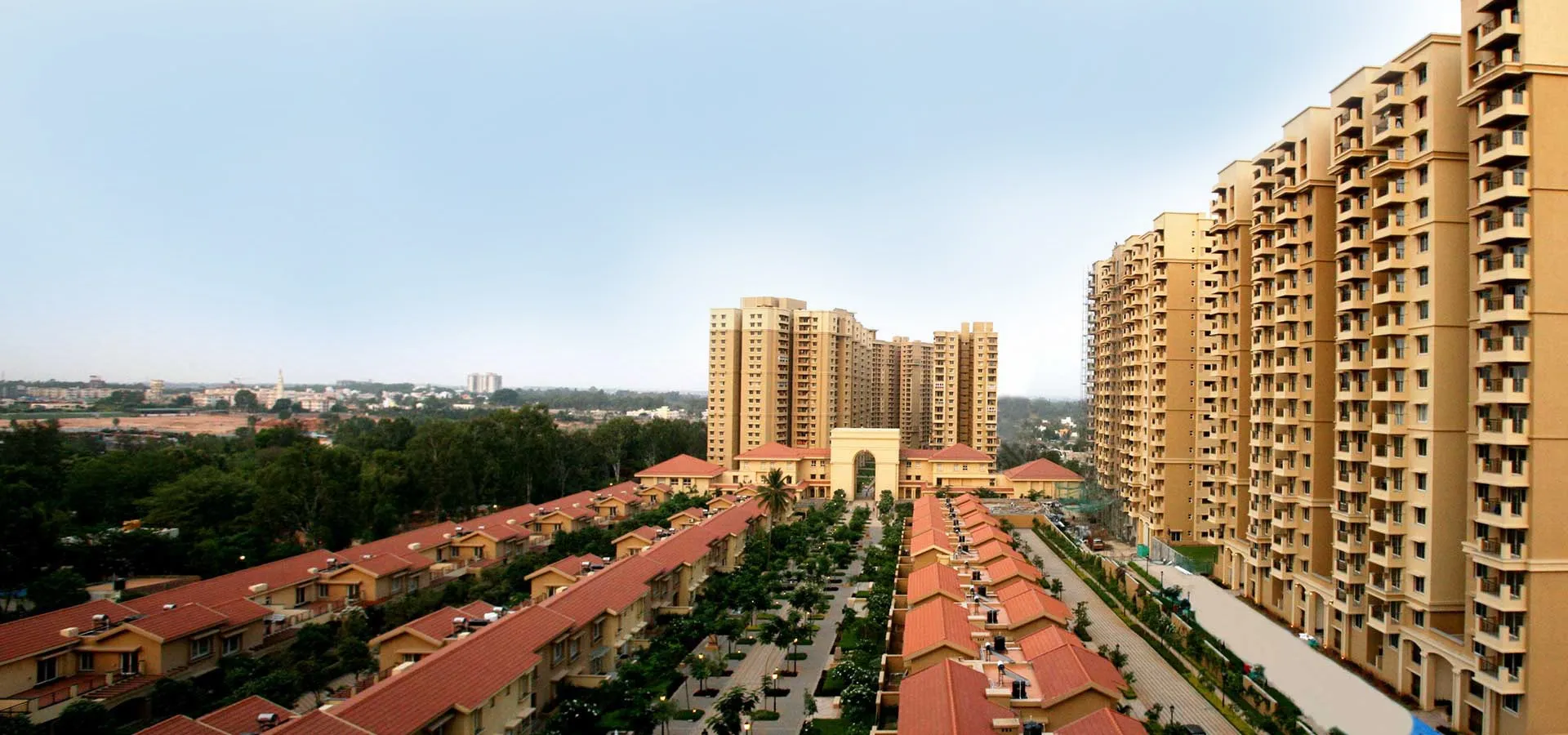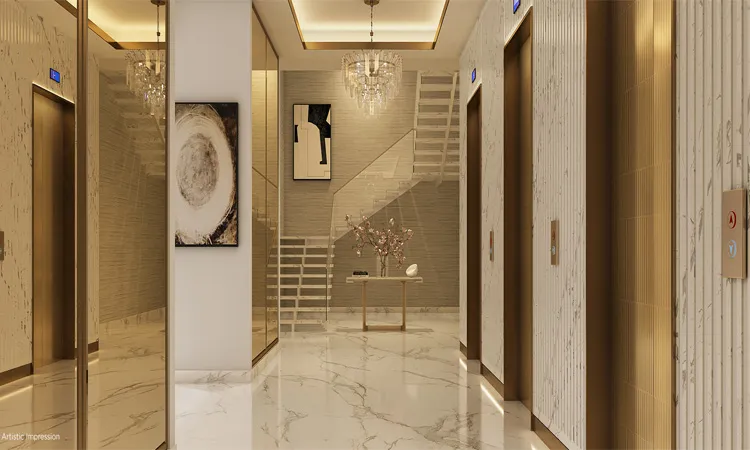
The headline is hard to ignore. Homes priced at ₹10 crore and above on Dwarka Expressway went from ₹383 crore of sales in 2024 to ₹8,347 crore in 2025, a nearly 22-fold jump, according to an India Sotheby's International Realty and CRE Matrix report cited by BusinessToday ahead of Diwali. Easy to read it as proof the whole corridor is on fire. It isn't quite that.
What the 22x number actually measures
It measures rupees, not homes. And the starting point was tiny. If every unit in that bracket cost at least ₹10 crore, ₹383 crore means 38 homes or fewer sold in 2024. The 2025 figure of ₹8,347 crore works out to at most about 830 homes, and fewer if the average ticket was higher.
So the real story is a brand-new ultra-luxury segment arriving on a road that was, not long ago, sold on "affordable Gurugram" pitches. A few big launches closing in one year can move a base of 38 units a long way. One tower sells out and the multiple explodes.
That doesn't make the number fake. It makes it narrow. It tells you rich buyers have discovered Dwarka Expressway. It says almost nothing about the ₹3 crore apartment in Sector 99.
The broader price picture is calmer
For the corridor as a whole, Anarock data quoted in the same report shows average prices rising 135% in five years, from ₹6,032 per sq ft in 2021 to ₹14,180 in the first half of 2026. That is a strong run (roughly 18% a year if you smooth it out), but it is nowhere near 22x.
Put that in rupees. A 1,500 sq ft flat that cost about ₹90 lakh in 2021 would be around ₹2.13 crore at today's averages, before GST, registration and parking. Real money for early buyers. Also a reminder that new buyers now start from a much higher base.
The ₹2 to ₹5 crore band is the quieter signal
Most of our readers shop in this bracket, so look here. Knight Frank India data in the same coverage shows Delhi-NCR sales of homes priced ₹2 crore to ₹5 crore up 8% year on year to 15,333 units in January to September 2026, while launches in the band rose 15% to 17,273 units.
Read that twice. Launches are growing faster than sales. That is a very different mood from a 22-fold surge: buyers are still there, but supply in the mid-premium band is catching up, which gives you more room to negotiate on payment plans and floor choice. Our note on reading a Diwali discount before signing covers how to use that leverage without getting trapped by a flashy freebie.
Where the money is actually going on the corridor
The big-ticket activity clusters in the upper sectors. Branded and ultra-luxury towers such as M3M Elie Saab in Sector 111 (from ₹15 crore) sit at the top, while Sobha Altus in Sector 106 (from ₹6.5 crore) represents the step below. Our breakdown of Sectors 102 to 113 explains why that stretch pulls the premium buyer.
Further down the road, in Sector 88A and nearby, pricing is more grounded. We ranked the options in best projects in Sector 88A, and for a wider list there is the full Dwarka Expressway project comparison.
Rents have not kept pace
Here is the part festive headlines skip. Anarock's yield tracking, as reported in coverage of its 2019 to Q2 2026 study, puts Gurugram's average gross rental yield near 4.3% and Noida's near 3.9%. Those are citywide averages. On a ₹15 crore branded flat, a tenant paying even ₹1 lakh a month gives you 0.8% a year. That is a lifestyle purchase, not an income one, and that is fine as long as you know it going in.
If rent matters to you, our comparison of Noida and Gurugram as investments sets the two side by side. And be wary of any sales deck that quotes yield on launch price instead of what you will really pay after charges.
Four questions to ask before you follow the crowd
- Is the number about value or volume? A rupee total can rise because of ten big deals. Ask for unit counts.
- What is the possession date? Under-construction towers carry delivery risk. Check the project on the Haryana RERA portal and read the declared completion date, not the brochure's.
- What will it rent for? Prices have run well ahead of rents across NCR, so yields on new luxury stock are usually thin. Do the arithmetic on your own unit.
- Can you hold for five years? The 135% gain took five years. A festive-season purchase is not a quick flip.
A quick sanity check on your own budget
Before you shortlist anything, work backwards from the monthly outflow. At a ₹3 crore price with 20% down, the loan is ₹2.4 crore, and the EMI at current rates will take a large slice of most household incomes. Add the one-time costs (stamp duty, registration, GST on under-construction units, parking, club membership) and the true cash need is noticeably higher than the headline price. Buyers who skip this step are the ones who end up stretching, then selling early. Don't be that buyer.
The takeaway
Treat the 22x figure as news about who is buying at the very top, not as a forecast for your flat. If you are in the ₹2 to ₹5 crore range, the better data point is that supply is rising faster than sales, and that is a buyer's cue to compare three or four projects, push on the payment schedule, and decide on fundamentals instead of festive noise.