Haryana's district administration quietly rewrote the price tag on Gurugram land this year. Circle rates for 2026-27, the government-notified floor value used to calculate stamp duty, went up by as much as 75% in some sectors. Not 7%. Not 15%. Seventy-five.
If you own land near Dwarka Expressway or the Southern Peripheral Road, that's good news on paper. If you're trying to buy your first home there in the next six months, it's a different story, and it's worth working through who actually comes out ahead once the dust settles.
What Actually Changed
The revision, effective from April 1, 2026, wasn't uniform. Along Dwarka Expressway, in Sectors 104 to 115 (the Kadipur and Harsaru tehsils), residential plot rates rose 62-67%, moving from roughly ₹40,000-44,000 per square yard to ₹66,125-70,000. Flats in group housing projects there jumped from about ₹4,200 to ₹7,000 per square foot. A handful of premium pockets, including DLF Phase V and Sector 25, went up as much as 75%. Compare that with Golf Course Road, Sectors 42, 43 and 54, where luxury rates barely moved, up just 10-20% to around ₹39,325-39,350 per square foot. Along SPR, Sectors 63, 63A, 64 and 67 rose roughly 45%, while Sectors 62, 65, 66 and 70 saw about 30%. Older, already-expensive Sector 29 got off comparatively easy at 15%. Kartikeya Sharma, associate principal partner at Square Yards, called it "a clear shift toward market-aligned pricing" (a polite way of saying the government was tired of collector rates lagging years behind what buyers were actually paying), according to Outlook Money's coverage of the revision.
That gap had been building for a while. Anyone who's tracked our sector-wise rate guide knows actual transaction prices on Dwarka Expressway had already pulled well ahead of the old circle rates. This revision mostly closes that gap rather than creating a new one.
Why Dwarka Expressway and SPR Got Singled Out
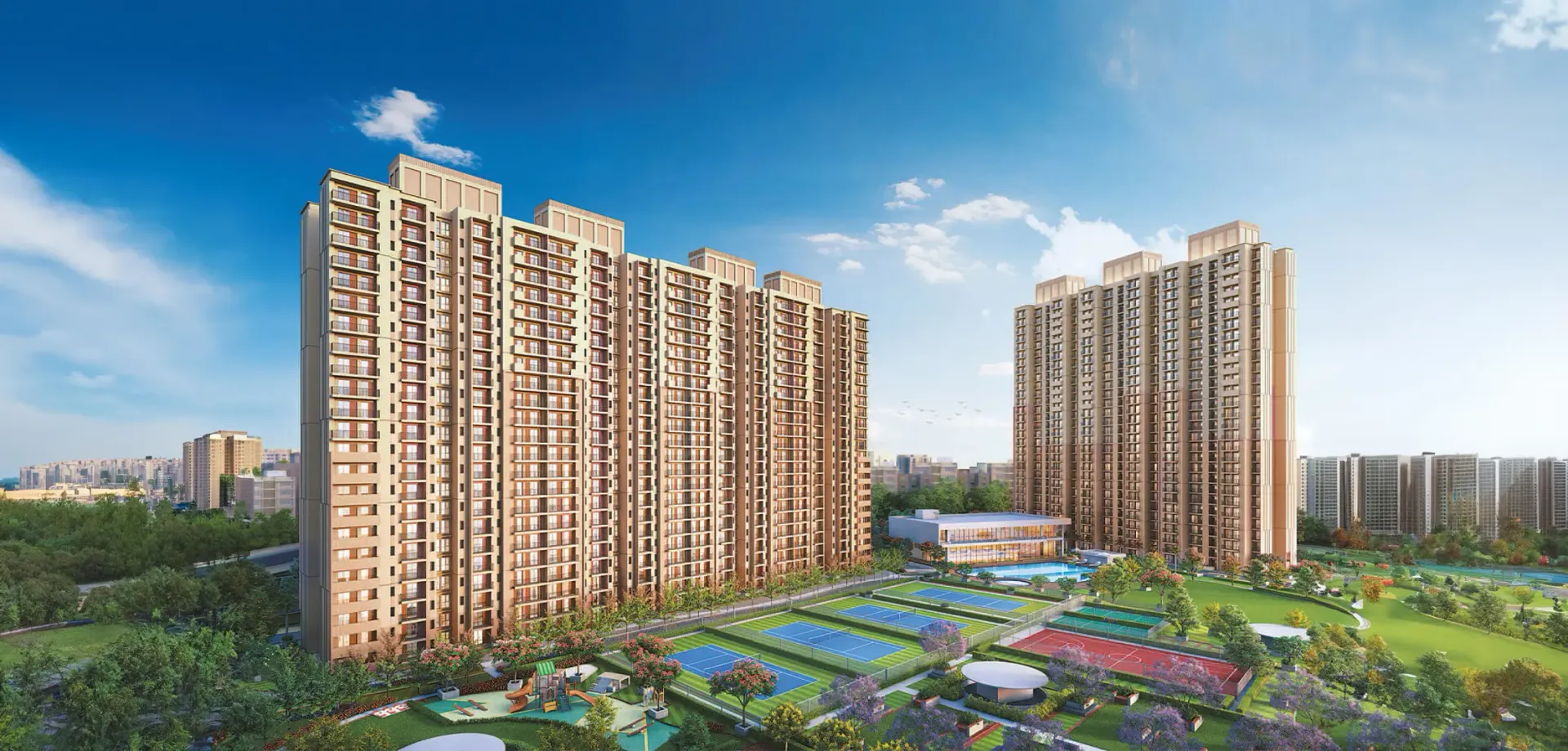
These two corridors have carried most of Gurugram's new supply for three years running. Projects on the Dwarka Expressway belt, including newer launches like Smartworld One DXP, sit right where infrastructure spending (the expressway itself, the Dwarka-Manesar link, upcoming metro extensions) collided with genuinely scarce land. Prices there rose fast enough that circle rates simply had to catch up. Compare that to the older SPR corridor, where our project roundup shows steady but less explosive appreciation, and the smaller 30-45% hike there makes more sense. A Tribune report on the same revision confirms Dwarka Expressway pulled ahead of every other corridor in the district.
If you're weighing Dwarka Expressway against Golf Course Road or Sohna, our corridor comparison is worth a read before this circle rate change nudges your math one way or another.
The Timing Lines Up With Softer Launch Numbers
Here's the part that makes this revision sting a bit more than usual. ANAROCK's Q2 2026 data shows new housing launches across the NCR fell 40% year-on-year, down to 11,205 units from 18,760 a year earlier, even as sales dipped only 6% to 13,365 units, according to a Zee Business report on the same dataset. Noida and Greater Noida took the harder hit, launches down 72%, sales down 20%, while Gurugram's premium belt held up comparatively well.
So supply was already tight when the government raised the floor price on registrations. Sellers holding land or ready inventory near Dwarka Expressway get a stronger negotiating position almost by accident. Buyers get less room to argue the deal down, since stamp duty now gets calculated on a higher base regardless of what price you actually strike with the seller.
Who Actually Comes Out Ahead
Landowners and long-term holders near the revised corridors benefit most directly; their collateral value for loans just went up, and any future sale gets priced against a higher floor. Developers with unsold inventory in Sectors 63-70 also gain, since resale comparisons now favor higher listing prices.
Buyers don't lose outright, but they do pay more at registration even if the seller doesn't budge on price. In Haryana, stamp duty runs 7% for male buyers, 5% for female buyers and 6% for joint ownership in urban areas like Gurugram, plus a registration fee of 1% (capped around ₹50,000). Push the taxable base up 45-75% and that's real money, sometimes ₹3-8 lakh extra on a mid-size apartment, depending on the sector and configuration.
What This Means If You're House-Hunting Right Now
- Budget for the new circle rate, not last year's, when estimating total cost. Your bank's valuation and your stamp duty bill will both reference the current one.
- If you're eyeing Dwarka Expressway specifically, check whether the project's carpet-area price already sits above the new circle rate. If it does, the hike barely changes your all-in cost since stamp duty was always going to be based on the (higher) transaction value anyway.
- Sellers in Sector 29 and other mature pockets have less room to push prices up than the headline 75% figure suggests, since their circle rate only moved 15%.
- Always confirm the builder's RERA registration on Haryana RERA before any registration happens; a circle rate hike changes nothing about a project's legal standing.
For a broader read on why NCR developers are still buying land despite the launch slowdown, our earlier piece on what's driving that appetite connects some of the same dots: scarce approved land, rising input costs, and now, a government floor price that's finally caught up to the market.
The Bottom Line
A 75% circle rate jump sounds dramatic in a headline, but it mostly formalizes prices that had already moved. If you're buying on Dwarka Expressway or SPR this year, budget the higher stamp duty upfront rather than treating it as a surprise at registration. If you're selling in one of the hard-hit sectors, you have more room to hold your asking price than you did in March. Either way, get the exact current-year rate for your specific sector from the district collector's office (not a blog, not an agent's estimate) before you sign anything. Circle rates get revised again next April, and Haryana has shown it isn't shy about moving them.